
RISE-Health’s proposals focused on Clinical Research, Artificial Intelligence and Digital Health.
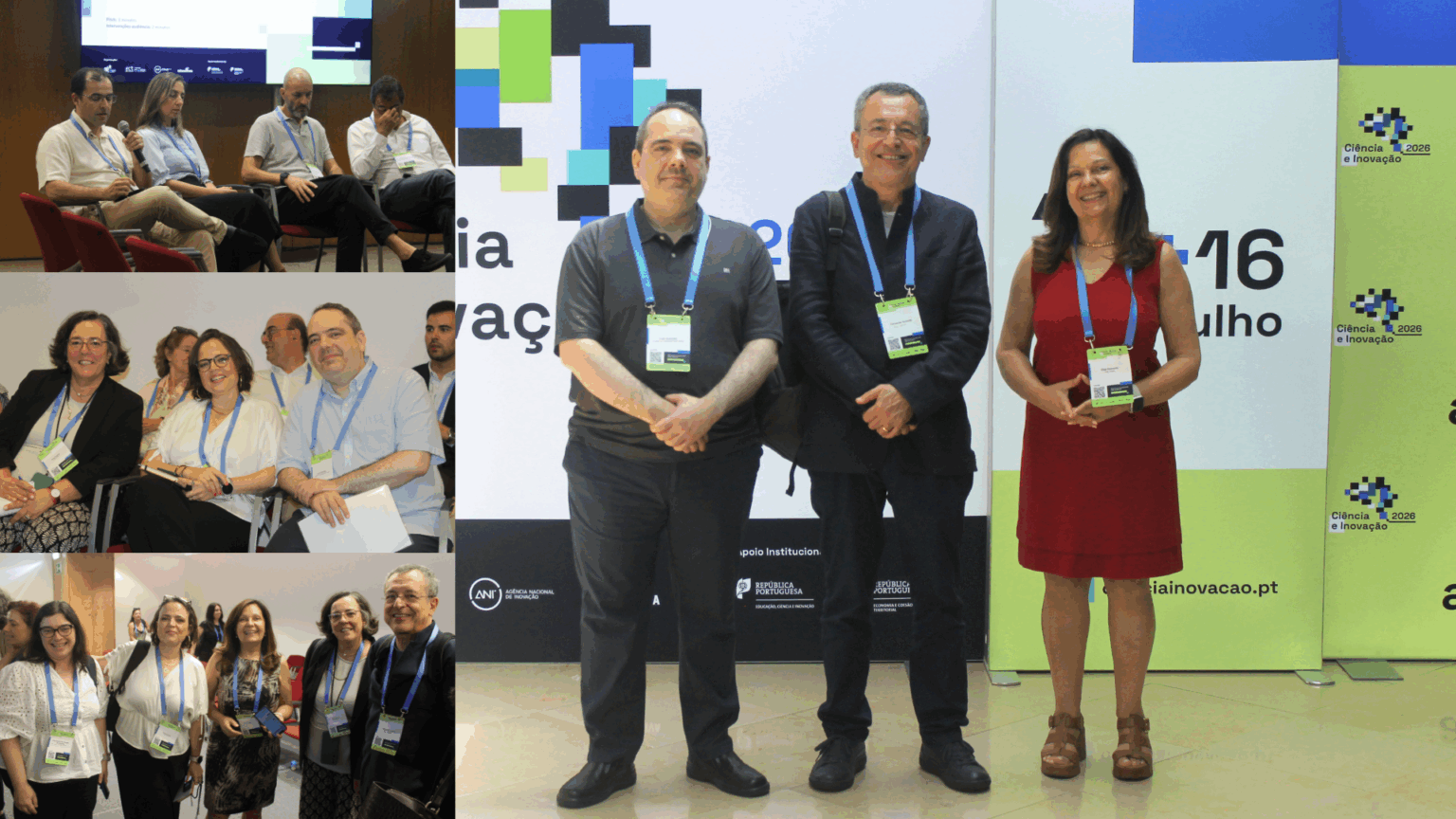
The RISE-Health Research Unit took part, for the first time, in the Encontro Ciência 2026, an initiative organised by the Agency for Research and Innovation (AI²) and Ciência Viva.
Between 15 and 16 July, RISE-Health was present at the Lisbon Congress Centre, the venue for the latest edition of the Science 2026 Meeting.
Under the theme “Preparing for the Future”, the country’s largest Research Unit made its debut at the event with a parallel session entitled “Priorities for Clinical Research in Innovation”, in which Luís Azevedo and Elisa Keating, experts from RISE-Health, discussed the impact of research on health.
In the debate “Science, Value and Access: Priorities for Health Technology Assessment”, led by Luís Azevedo (RISE-Health/FMUP), co-organised with the CHRC – Comprehensive Health Research Centre, NOVA CRU, NOVA Medical School, the Laboratory of Socio-Pharmacy and Public Health at the Faculty of Pharmacy, University of Coimbra (FFUC) and IQVIA Portugal, the need to strengthen national scientific capacity in health technology assessment was emphasised, against a backdrop marked by the implementation of the new European regulation on Health Technology Assessment (HTA).
During the debate, a strategic focus on the production and synthesis of scientific evidence, the use of real-world data, the economic and methodological evaluation of health technologies, and the development of appropriate models for digital technologies and artificial intelligence was advocated. The importance of reducing the time it takes for patients to access innovation was also emphasised, as was the need to strengthen the interoperability and harmonisation of health data, promote collaboration between institutions, and involve patients and other stakeholders in the research process, ensuring that Portugal plays an active role in European joint clinical assessments, thereby guaranteeing faster, more equitable and sustainable access to health technologies.
Meanwhile, Elisa Keating (RISE-Health/FMUP), in partnership with NTT Data Portugal, the São João Local Health Unit, Nova Medical School, and the CHRC-Comprehensive Health Research Centre, led the proposal “Clinical and Real-World Evidence: Portugal Towards Greater Impact in Health Research’, which aimed to reinforce clinical research as a central strategic priority within the National Research and Innovation System, contributing to talent retention, attracting investment and improving public health through clinical trials, observational studies, real-world data and prevention-oriented research.
During the session, the need to overcome the fragmentation of data and institutions, and to strengthen collaboration, communication and targeted funding was highlighted, with the view that clinical research and biomedical innovation should be recognised as national strategic priorities to promote more equitable health, a more efficient system and a more sustainable future for Portugal.
At what was the first edition organised by the Agency for Research and Innovation (AI²), resulting from the merger between FCT and ANI, researcher Ricardo Correia (RISE-Health@RISE), in partnership with e-MAIS – the National Association of IT Professionals for Health, VirtualCare, OpVance, and PDH – “took to the stage” on the second day of the event.
The RISE-Health specialist presented on the topic “Digital Health and Artificial Intelligence: Promises and Priorities for Portugal”, exploring the opportunities and challenges associated with the digital transformation of healthcare systems and the growing integration of artificial intelligence into healthcare delivery, research and management.
During the debate, it was emphasised that the development of digital health in Portugal depends on the creation of secure infrastructures for managing sensitive data, the interoperability of information systems, the training of professionals, and coordination between healthcare institutions, research bodies, companies and public authorities.
The need to overcome data fragmentation, accelerate the adoption and validation of digital solutions in healthcare services, promote sustainable and scalable models that generate economic value and clinical impact, and strengthen citizens’ trust in the use of artificial intelligence and digital technologies – whilst ensuring data protection, digital sovereignty and the effective transfer of innovation to the market and to healthcare
The unit was also represented by Fernando Schmitt, director of RISE-Health, and the researchers Sílvia Socorro (RISE-Health/UBI), Rute Almeida, Tiago Jacinto (RISE-Health/FMUP) and Isabel Duarte (RISE-Health/UAlgarve).
The strong mobilisation of the scientific and innovation community was evident in the 206 proposals for topics for debate, involving more than 1,200 participants and around 1,000 organisations, who worked across 20 sessions spread across six strategic macro-areas: Digital, Health, Environment and Territory, Industry and Energy, Society, and the Science and Innovation Ecosystem.
The Science 2026 Meeting was organised by AI² – the result of the merger between the Foundation for Science and Technology (FCT) and the National Innovation Agency (ANI – ANI) – and Ciência Viva. The initiative also received institutional support from the Portuguese Republic.