
She is a researcher at RISE-Health, a full professor in the Department of Genetics and Biotechnology at the School of Life and Environmental Sciences of the University of Trás-os-Montes and Alto Douro (UTAD), and president of the Portuguese Society of Genetics.
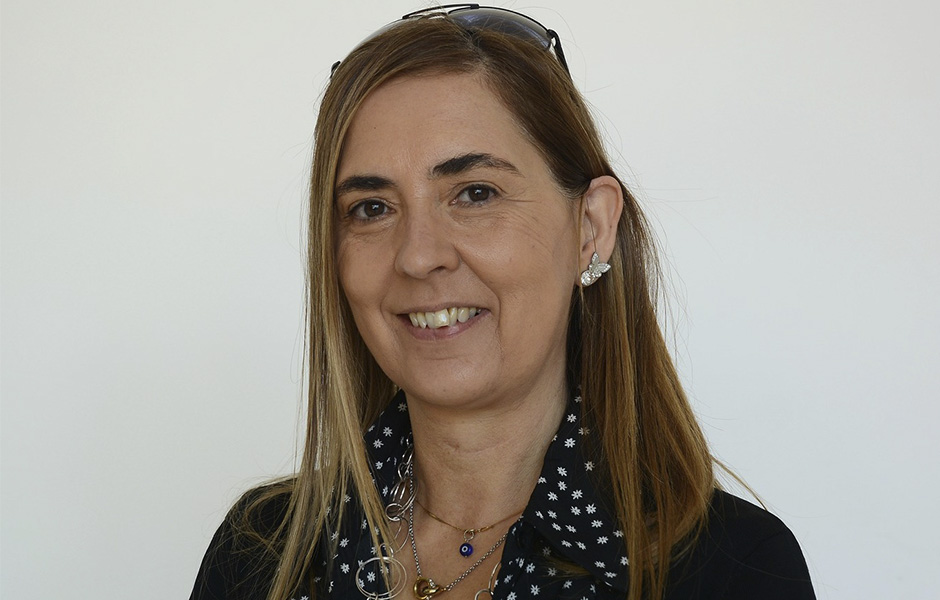
Raquel Chaves is a full professor of Genetics in the Department of Genetics and Biotechnology at the University of Trás-os-Montes and Alto Douro (UTAD), where she carries out teaching and research activities. She is also president of the School of Life and Environmental Sciences (ECVA) and vice-president of the Scientific Council of the same school. She is a member of the UTAD branch of the RISE-Health Research Unit, which is part of CINTESIS—the Centre for Research in Health Technologies and Services—and is headquartered at the Faculty of Medicine of the University of Porto.
In February 2026, she was elected president of the Portuguese Society of Genetics (SPG) for the 2026–2028 term. Throughout her career, she has held various scientific and institutional positions and was involved in the creation of the bachelor’s degree in Genetics and Biotechnology at UTAD, among other undergraduate, graduate, and postgraduate programs
She earned a bachelor’s degree in Biochemistry from the University of Porto in 1992 and completed her master’s degree in Molecular Genetics at the University of Minho in 1995, with a thesis on the application of molecular cytogenetics in the diagnosis of pediatric leukaemias. He returned to Vila Real and began teaching at UTAD in 1998, the same year he started his PhD at the same institution, with research stays at the National Cancer Institute in the U.S. and the Pathology College at the University of Cambridge in the U.K.
Her scientific work focuses on chromosome biology and non-coding sequences of the genome, with a particular emphasis on their role in chromosomal alterations, tumour formation, and cancer development. Her research areas include satellite DNA, chromosome biology, RNA biology, and genomics, with over three thousand citations in the scientific literature.
Your academic career is strongly linked to genetics and molecular biology. What motivated you to pursue this field, and what were the key moments that solidified that choice?
I knew from a very early age that I wanted to pursue genetics. In high school, I always loved biology, and at the time, I read a science fiction book centred on the possibility of human cloning, which had a profound impact on me.
From that moment on, I decided I wanted to be a geneticist, but I knew there weren’t many options for studying this field, so I ended up choosing biochemistry because it seemed like a more experimental program to me. Some people were a little annoyed with me because I had high enough grades to get into medical school, but that wasn’t my passion.
I really like the medical field as a science and the interaction with people, but I’m an emotional person, and I believe I wouldn’t be able to handle some of the moments that the medical profession demands. What I’m passionate about is working in the lab, at the microscope, with cells and chromosomes—something that, at its core, is working with life in its most fundamental form.
Much of your work focuses on genomic instability and cancer. What advances do you consider most significant in this area in recent years, and what challenges remain unresolved?
Recently, there have been major advances in the study of cancer at the molecular level, particularly in the molecular characterisation of various cancer types, which have yielded potentially useful biomarkers for diagnosis, prognosis, and therapeutic guidance.
At this point, cancer is no longer a death sentence, and I believe genetics has played a major role in this. We already have several therapies that allow us to fight this disease, but I hope that knowledge continues to advance because we have an increasing number of cases, largely due to our greater longevity as well.
With experience in international collaborations, how do you view the position of Portuguese research in the field of genetics and cancer on a global level?
In the field of genetics and in all other fields, I have always viewed the Portuguese and Portugal as key players. We have capable and knowledgeable people, and we have excellent researchers in various fields.
The challenge we face is that we are a small country, and therefore we cannot compete with countries like China or the United States. However, in all the collaborations I’ve been part of, I’ve never felt inferior for being Portuguese—quite the opposite. The international colleagues I’ve had the opportunity to work with really appreciate our way of thinking, our demeanor, and, above all, our resilience.
In your opinion, what impact can RISE-Health have on how research is conducted in Portugal, especially in the health sector?
I believe the Research Unit is an excellent opportunity to collaborate with researchers from all the management hubs that make up RISE-Health. For the University of Trás-os-Montes and Alto Douro (UTAD), joining this Unit was particularly significant, since, at the time of our admission, we were in the process of developing our medical program. This process allowed us to learn from institutions such as the Faculty of Medicine at the University of Porto, which boasts a 200-year history.
What does being part of the RISE-Health Research Unit mean to you?
I am proud to belong to a research unit like RISE-Health, which includes researchers from various fields. Right now, the phrase that best describes how I feel is “a desire to work,” since we are moving beyond the consolidation phase of our research unit. Now, we must focus on producing scientific knowledge to achieve results so that we can later implement solutions.