
Researcher at RISE-Health, part of the RISE Associated Laboratory, and founder of the spin-off expressTEC.
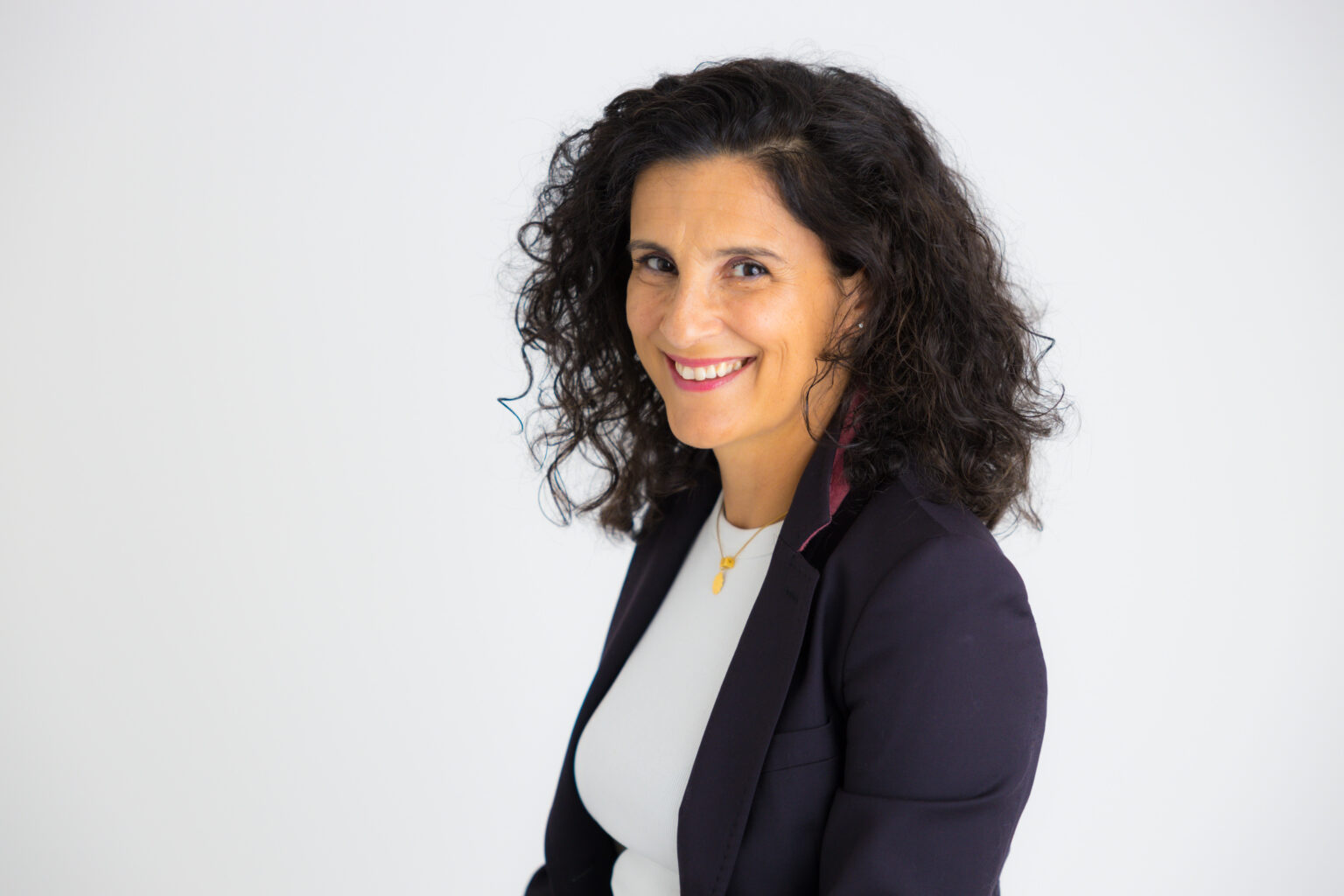
Ana Teresa Maia knew from an early age that she wanted to help people and that she intended to do so through the study of genetics. Passionate about research, she graduated with a degree in Applied Chemistry – specialising in Biotechnology – from the Faculty of Science and Technology at Universidade Nova de Lisboa, before moving to the UK, where she completed a Master’s degree in Molecular Genetics at Imperial College London and a PhD in Human Genetics at the Institute of Cancer Research (University of London).
A cancer specialist, focusing on breast cancer and precision medicine, she is also the founder of the spin-off expressTEC, through which she seeks to bring research biomarkers into clinical practice. Her career has already been recognised with the 1st Global Health Accelerator Award, the Women TechEU Award and Deloitte’s Women In Leadership Award, amongst others.
What led you to pursue a career in Applied Chemistry – Biotechnology and cancer research? Was there a particular moment or experience that proved decisive along the way?
Applied Chemistry came about by chance. I’ve always been very interested in genetics, and it was genetics that fascinated me as a teenager. At the time, Applied Chemistry was a relatively new degree programme in Portugal, and although I’d applied to study Medicine, Medicine was definitely not my calling, as the prospect of patient contact made me nervous.
I enjoy being in the laboratory and understanding diseases, particularly cancer. My interest was sparked when, at the start of my studies in science and genetics, I read an interview with Professor Sir Bruce Ponder in Scientific American. Fifteen years later, he would go on to become my postdoctoral supervisor.
I believe that part of this passion also arose because, at the age of 16, I was misdiagnosed with cancer whilst watching two of my grandparents suffer from the disease. At the time, I was desperate to understand why people got this disease and how science could help.
Throughout your career, you have worked in areas related to molecular oncology, biomarkers and precision medicine. What continues to fascinate you most about cancer research, and what do you consider to be the biggest challenges in this field today?
Precision medicine has been growing. If we look at chemotherapy, which was initially seen as a one-size-fits-all solution, we now realise that each cancer is a disease unique to each patient. In the case of breast cancer, which I have been working on since 2003, one of the studies I took part in enabled us to subdivide it into ten different diseases, each of which must be treated in a completely different way.
This phenotypic diversity and clinical variability among patients must be examined very carefully if we are to effectively increase response rates because, even today, we know that 50 per cent of patients newly diagnosed with cancer will not respond to their first course of treatment.
Your career also includes a strong focus on innovation and the transfer of knowledge to the business sector, through expressTEC. In your opinion, how important is it to bring academic research closer to industry and clinical practice?
I belong to a generation that was brought up to believe that scientific research served to create knowledge, not to generate money. We would make a discovery, publish a paper and wait for someone, one day, to transfer that knowledge into the real world.
In research, my motivation has always been to help patients, ever since my PhD, when we were diagnosing childhood leukaemia in children from all over the world.
The largest project I’ve been involved in published its first results in 2012, and 14 years on, it still has no direct clinical application. Why? Because when data is collected using public funds and published in open access, and there has been little investment in patenting – often due to a deliberate ethical decision, based on the conviction that taxpayer-funded research should remain open to all – But without a patent, industry won’t come to our ‘drawers’ to fetch the articles and turn them into products that reach clinical practice. And research, on its own, does not generate enough confidence for patients to seek solutions for their day-to-day lives through it.
We must transform knowledge into products and tools that reach the clinic. I feel I have entered a third phase of my career: after learning how to do things and making discoveries, the time has come for me to be the one to bring the biomarkers and the knowledge generated over 25 years to the clinic and to the patient.
It is only through my determination and my sense of mission that these tests will reach patients. More than a passion, I feel it is a duty: if I have discovered something using public funds, the only way to make it available to the public is to turn it into a marketable product myself.
As an integral member of RISE-Health, what do you consider to be the main contributions that a multidisciplinary research unit can make to the advancement of health research in Portugal?
Anyone carrying out translational research cannot be based at a centre that covers only part of their research process. I need good laboratory research conditions, access to knowledge and clinical samples, and that is what RISE-Health provides: fertile ground for conducting good translational research in Portugal.
Our company is a spin-off from RISE-Health, and it is through the unit that I have access to the clinical samples needed to validate our test. We are also setting up a computing centre at RISE-Health with high-capacity servers – something my company would not have been able to set up on its own. As a member of the unit, I can make use of this infrastructure rather than relying solely on cloud services, for example.
There is strength in numbers. It is far more effective to have a robust, central computing centre accessible to all members than for each person to set up a smaller local setup which, on its own, is of little use. The different strands that RISE-Health brings together are essential for translational research.
When you think about the future of health research, what makes you most optimistic?
I am an optimist by nature. I was born already thinking about opportunities I don’t even know exist yet. If I look back, everything I do today didn’t exist when I was born. When I started my PhD, Computational Biology didn’t even exist as a field, and that’s where I set up and led a team at the University of the Algarve.
I’ve been through various phases of science, and what makes me most optimistic is precisely what I don’t yet know is going to happen.