
A pioneering study by RISE-Health and FMUP uses an AI model to detect acute respiratory noise with 87 per cent accuracy.
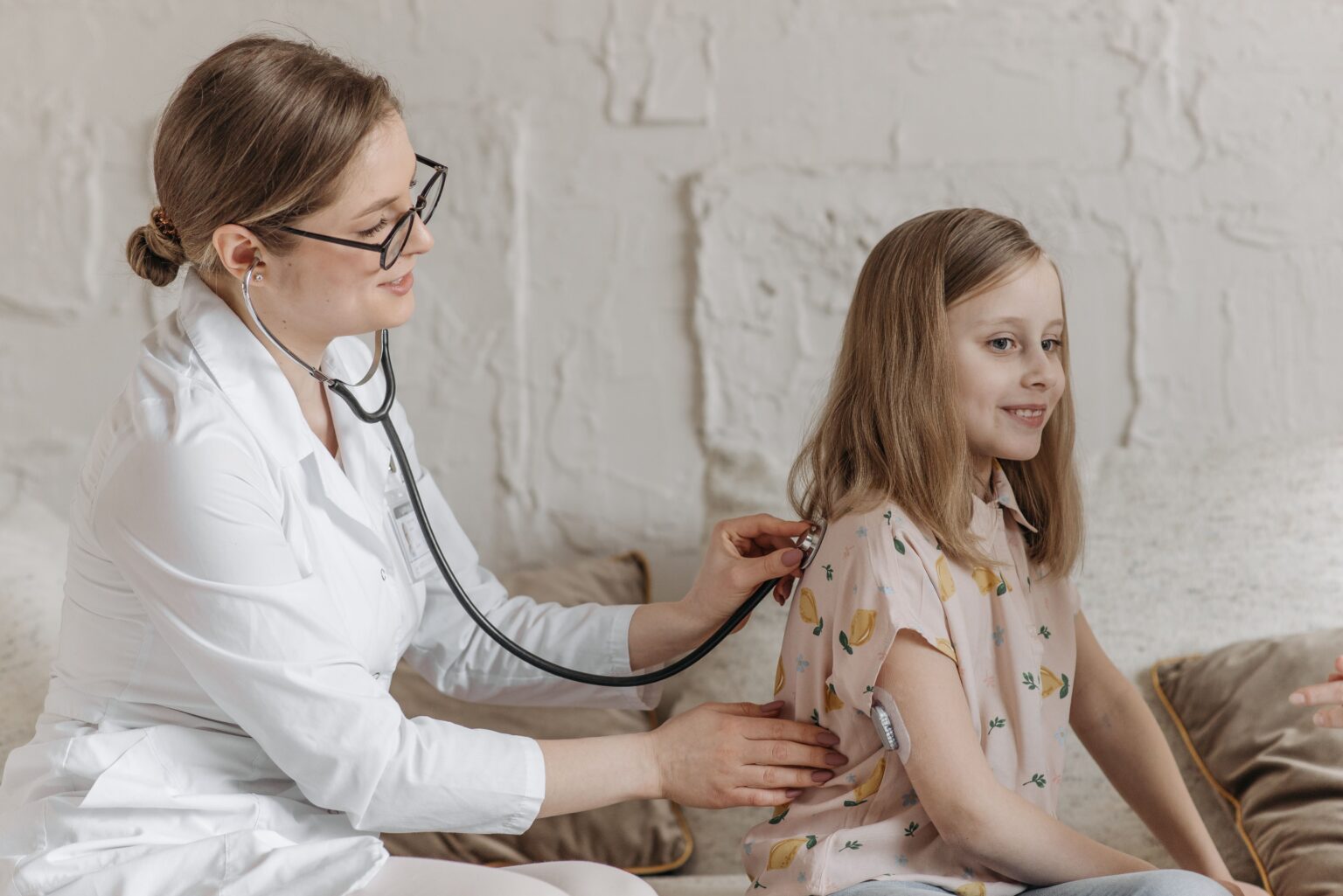
Pulmonary auscultation using a smartphone, combined with artificial intelligence (AI), may offer a promising alternative for paediatric respiratory telemonitoring, concluded a research group led by scientists from the RISE-Health research unit and the Faculty of Medicine of the University of Porto (FMUP).
This is the first study to apply an AI model to detect acute respiratory sounds, similar to a wheeze or ‘chest wheeze’, using respiratory sounds recorded by smartphone, and involved 217 children and adolescents aged between 0 and 17 years.
The results revealed that the AI model developed by this group of Portuguese researchers achieved 87 per cent accuracy in detecting respiratory sounds, a result considered promising by Cristina Jácome and Inês Pais-Cunha, the study’s coordinators and researchers at RISE-Health and FMUP.
“Currently, the standard approach to the diagnosis and monitoring of paediatric respiratory conditions is based on a face-to-face clinical assessment. In this setting, the doctor takes a history of symptoms from the parents and the child, carries out a physical examination — using a traditional stethoscope to detect acoustic signs such as wheezing or crackles — and requests further tests, such as spirometry,” they explain.
According to the experts, “in the traditional model, it is difficult to detect periods of exacerbation between appointments. Clinical management therefore relies on an indirect assessment of disease control, which can introduce subjectivity and lead to less accurate therapeutic decisions”.
In the study published in the scientific journal European Journal of Pediatrics, which included 2,020 recordings of respiratory sounds made using smartphones, the experts conclude that “auscultation via smartphone is a promising technology for integration into remote monitoring systems”.
“The widespread availability of smartphones equipped with high-quality microphones offers a practical, non-invasive and scalable solution for recording respiratory sounds in clinical and home settings, thereby eliminating the need for additional devices and enabling data collection via a single, familiar tool,” the scientific paper states.
According to the researchers, “pulmonary auscultation via smartphone is particularly valuable in paediatric care, as it overcomes the barrier posed by the need for active cooperation from the child”, and is a “technology that enables and scales up remote monitoring, acting as a central pillar for future Clinical Decision Support Systems”.
The researchers also point out that, in addition to identifying wheezing, “these recordings may also be analysed to identify other sounds, known as crackles (crackles), which are essential acoustic biomarkers for the diagnosis and monitoring of children with chronic respiratory diseases, such as cystic fibrosis, and with lower respiratory tract infections, such as pneumonia”.
Led by Cristina Jácome (RISE-Health/FMUP), the scientific article “Wheeze detection in real-world paediatric care: AI applied to smartphone lung auscultation”, published in the European Journal of Pediatrics, featured contributions from Inês Pais-Cunha, Maria Catarina Silva, Henrique Ferreira-Cardoso, João Fonseca and Inês Azevedo, researchers at FMUP and the RISE-Health research unit, alongside other Portuguese researchers, notably from the University of Coimbra.