
News / Interview | António Soares
Executive Director of the RISE-Health Research Unit, Executive Director of the RISE Associated Laboratory and member of the Scientific Council of the Faculty of Medicine of the University of Porto (FMUP).
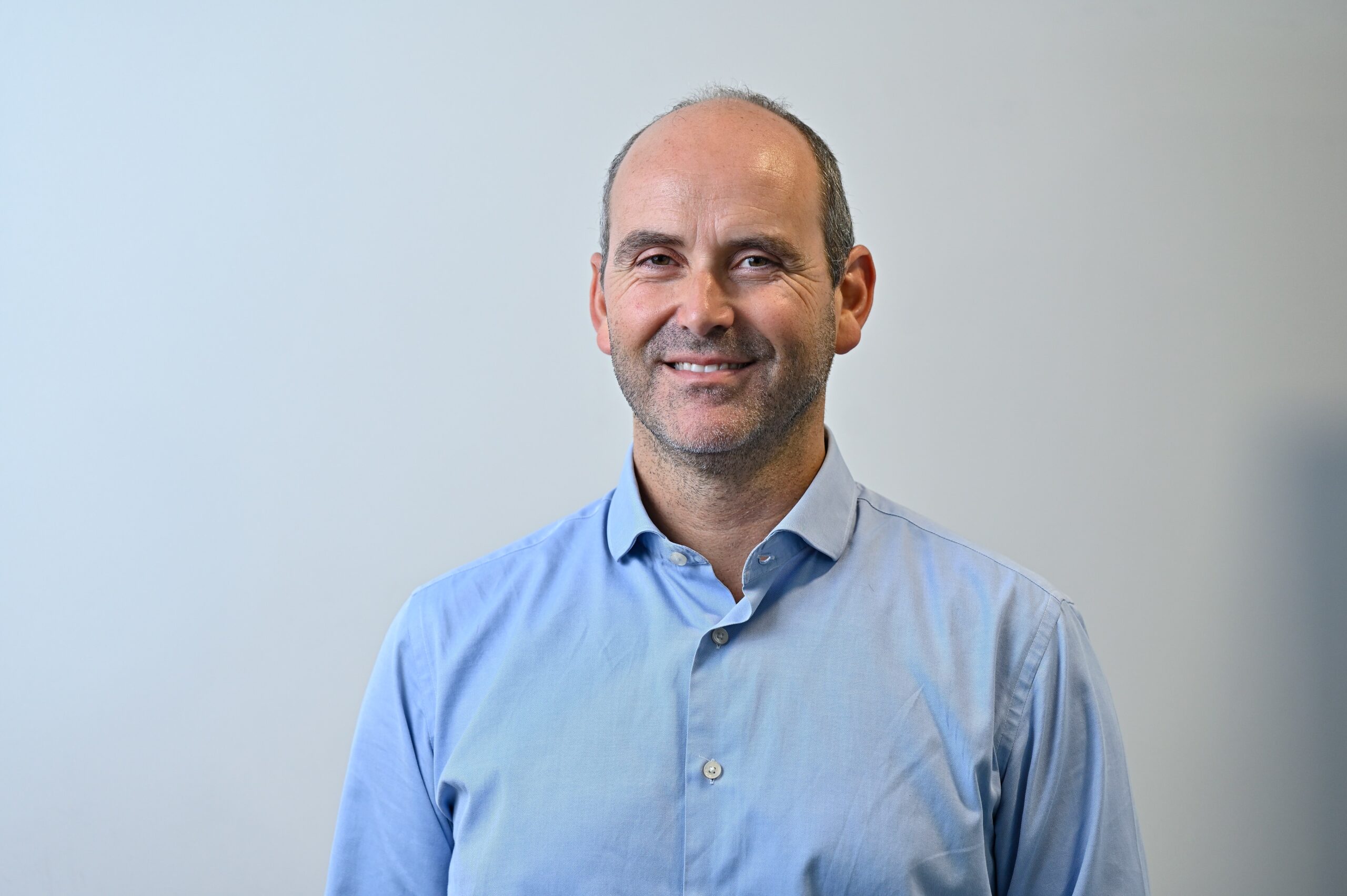
António Soares is a principal investigator and executive director of the RISE Associate Laboratory – Health Research Network and RISE-Health, a research unit based at the Faculty of Medicine of the University of Porto (FMUP), where he is a member of the Scientific Council.
He regularly collaborates as an expert with various national and international funding agencies, including the European Commission, EUREKA, the National Innovation Agency (ANI) and the Portuguese Foundation for Science and Technology (FCT).
He holds a PhD in Health Psychology from the University of Minho and has postgraduate training in Project Management and Management from Porto Business School (PBS). In 2011, at the Faculty of Medicine of the University of Porto (FMUP), he joined a project in Clinical Communication, which enabled him to visit all the national medical schools and gain in-depth knowledge of Medical Education in Portugal.
He was also a trainer at the Porto Medical Simulation Centre (CESIMED) and an associate member of the FMUP Biomedical Simulation Centre.
You graduated in Health Psychology from the University of Minho and obtained your PhD in the same field. What led you to choose this academic path? Was it a natural decision from an early age or the result of influences and opportunities along the way?
Yes, I decided to work in psychology from a very early age and never imagined that I would end up doing what I do now. In fact, I had my clinical practice for about 10 years, sometimes in very demanding contexts and with complex cases, which, in addition to being rewarding from a human point of view, also gave me extensive experience in managing a wide range of situations.
The PhD arose from my need to try to explain what I observed in clinical practice and which, at the time, was related to the treatment of substance dependence, more specifically in the area of family therapy.
During my PhD, I was invited to teach in the Psychology, Nursing and Medicine courses at the University of Minho and ended up getting involved in research. In this context, and during a series of visits to the universities of Oxford, Tubingen and Dresden, the most striking aspect for me was the quality of the research support structures, which at the time were far ahead of what was being done in Portugal. After working for a year at the Faculty of Medicine of the University of Porto on a research project, the opportunity arose to work at the Centre for Health Technology and Services Research (CINTESIS), as Professor Altamiro da Costa Pereira, director of FMUP, had the same vision on science management, and from there, the rest is history.
Throughout your training, you also invested in Project Management and Management at the Porto Business School. How did these complementary skills shape your approach to research and academic management?
One of the difficulties I encountered was the lack of specific training for what I was doing. Public information sessions on funding, networking, and open science are good, but they don’t really provide a theoretical structure, framework, or method.
In management and project management, I found, in part, that support and validation for what I was doing, and I think it helped me a lot. I have recently received some requests from institutional leaders for professionals, so I am preparing more structured training in this area, in addition to developing studies on evidence in science management practices and their impact on health outcomes.
The creation of RISE-Health marked the merger of several research units into a single structure. What motivated this merge and what strategic objectives were behind this decision?
The RISE-Health Research Unit is focused on promoting clinical research. This area has great potential for development in Portugal, but suffers from the fragmentation of resources due to geographically dispersed structures with little coordination and strategic alignment. In addition, the transition from preclinical to clinical studies is often not seen in an integrated way. RISE-Health seeks to bridge these gaps and take advantage of the best of each of the consortium entities, optimising existing resources.
RISE-Health recently secured €12.9 million in funding from the FCT. What practical impact will this support have on the work of research teams in the coming years?
It seems like a lot of money, but we must also take into account that RISE-Health is the largest Portuguese research unit, almost three times the size of the second largest. We have presented an ambitious scientific re-equipment plan that involves providing institutions with world-class research infrastructure. This infrastructure must be seen as an investment, as it will enable the development of research projects, attract and retain researchers, and also provide specialised services to industry, which will generate high-quality scientific outputs and attract international and private funding.
We must also respond to the recommendations of the evaluation panel, including the need to support the recruitment of young researchers, internal research projects across thematic lines and support for internationalisation through links to European scientific infrastructures such as ECRIN, EATRIS and ELIXIR. In addition, there is some basic support for the costs associated with publishing scientific articles and presenting at international conferences. All of this serves to create the conditions for researchers to foster their partnerships and enter into competitive consortia.
If I had to identify one measure in particular, I would say that my favourite is the seed projects (internal projects), as I see them as catalysts for creativity and internal cohesion within the unit, and I think they will have the greatest direct impact on researchers.
In your view, how important is a research unit such as RISE-Health for the future of science and health in our country?
RISE-Health is based on a different foundation from other Portuguese UIDs, and we can have a different impact. Firstly, because we are within the Academy – and that makes all the difference – secondly, because our subject area (Clinical Research) is inherently applied, and finally, because we aggregate and coordinate resources and critical mass in various clinical areas.
Cooperation between our researchers is intrinsic to our daily work, and we seek to turn our weaknesses into strengths. Therefore, having had a very successful first proof of concept with CINTESIS, I believe that we can provide effective responses to current health demands and produce scientific excellence.